Work through every section in order. Each section has at least one activity, and your final score depends on completing all of them.
Watch the video in Section 6. It will help you understand Chaim Salomon's role more clearly before you answer the later questions.
1. The Financial Crisis of the Revolution
Read + Check1
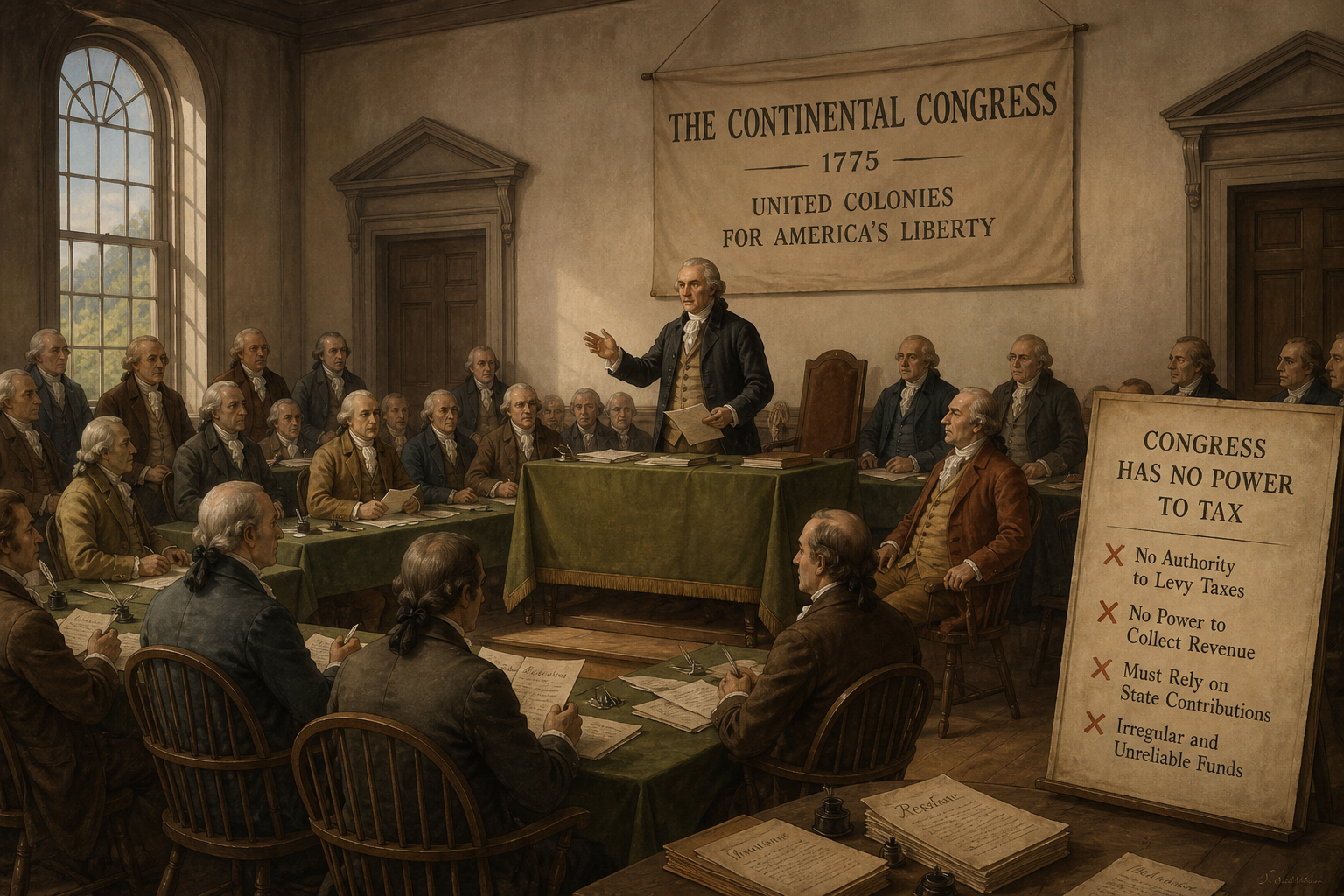
When the American colonies declared independence in 1776, they created a new national government known as the Continental Congress. This government led the war effort, managed foreign relations, issued money, and tried to supply the Continental Army.
Yet Congress faced a serious structural weakness from the beginning: it had no stable source of income. It could request money from the states, but it could not directly tax the people. If states refused or delayed payment, Congress had very few ways to compel them to contribute.
This meant that the Revolution was not only a political and military struggle — it was also a financial one. The American cause depended on whether a weak government could somehow pay for a long and expensive war.
Key Idea
A government that cannot raise money has trouble acting like a government, even when its cause is popular.
Continental Congress and the limits of taxation — the structural weakness at the heart of the Revolution.
Check for Understanding: The Structural Problem
Choose the best answer for each question using the passage above.
2. What War Costs
Read + Sort + True/False2
War required enormous resources. Soldiers needed food, clothing, weapons, ammunition, transportation, medical care, and pay. Officers also needed a way to purchase supplies from farmers and merchants. Without reliable funding, even a motivated army would quickly dissolve.
Military strength therefore depended on financial strength. An army could have brave soldiers and skilled commanders, but without supplies and pay, it could not remain in the field for long.
Money→Supplies→Army→Victory
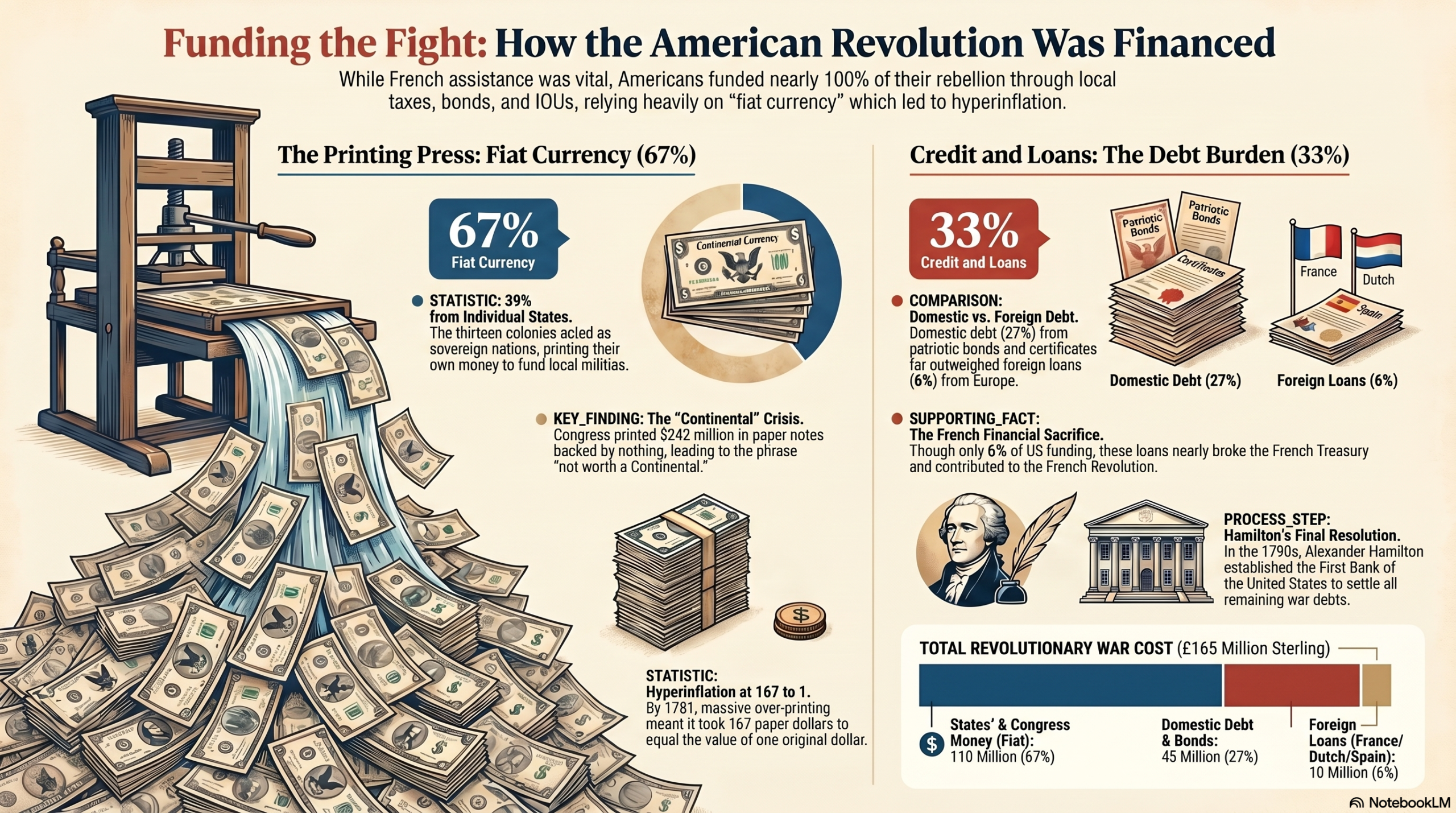
Sources of Revolutionary War funding — taxation, borrowing, printing, and private credit.
Chip Sort: What does an army need money for?
Click a chip to select it, then click the category box where it belongs. Sort all six chips.
Direct Army Needs
Government Finance
True or False: War and Finance
Select True or False for each statement based on the reading.
3. Printing Money and Inflation
Read + Match + Analyze3
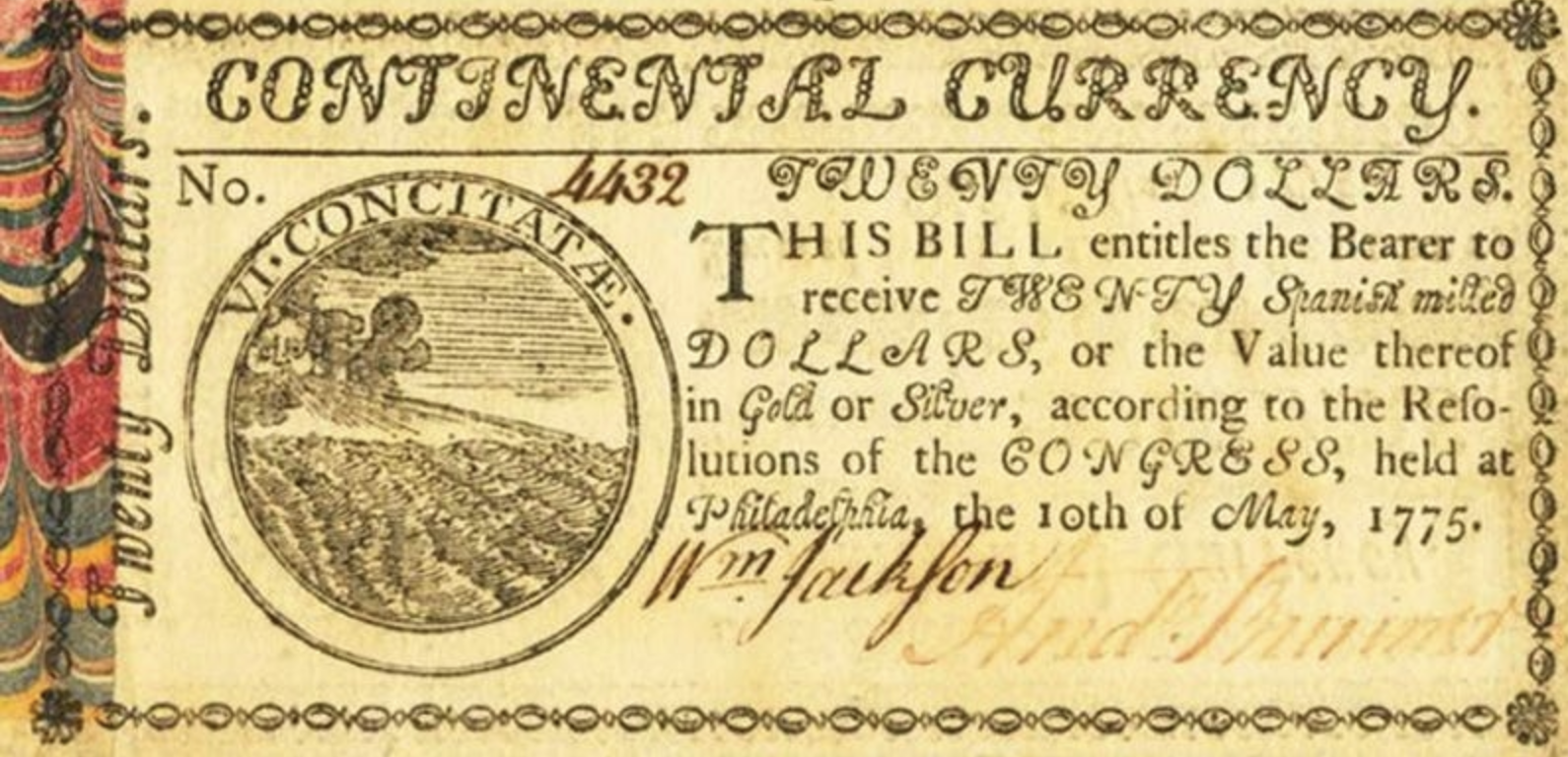
Because Congress could not collect enough tax revenue, it turned to an apparently simple solution: print paper money. This money became known as Continental currency.
At first, printing money helped Congress pay for supplies. Over time, however, too much paper money entered circulation. The value of the currency fell, prices rose, and people became less willing to accept Continental money as payment.
This process is called inflation. During the war, inflation became so severe that the phrase "not worth a Continental" became a common expression for something nearly worthless. By 1780, it took roughly forty Continental dollars to purchase what one dollar had bought in 1775.
Key Idea
Money works only when people trust that it has value. When that trust collapses, the money itself ceases to function.
Continental currency — printed in large quantities, it lost value rapidly through inflation.
Quick Glossary
Inflation
A general rise in prices, meaning each unit of money buys less over time.
Credit
The trust that a borrower will repay a loan; the basis for lending.
Taxation
Money collected by a government from its citizens or subjects.
Continental Currency
Paper money printed by Congress — became nearly worthless by war's end.
Yeshiva Finance Simulation: Apply the Vocabulary
Read each yeshiva-life situation and choose the financial idea it shows. The scenarios are not in glossary order, so use the concept, not the list.
Inflation in Practice: Three Questions
Apply your reading to each scenario.
4. The Failure of Credit
Read + Diagnose + Analyze4
As Continental currency lost value, Congress faced a second, deeper problem: it became increasingly difficult to borrow money. Borrowing depends on credit, and credit depends on trust.
A lender must believe the borrower can repay. But Congress had no dependable income, no direct taxing power, and a growing mountain of debt. Lenders — whether European bankers or American merchants — grew cautious. Why lend money to a government that might collapse before it could repay?
By the later years of the war, the financial crisis had moved beyond a simple shortage of cash. The American government was losing the credibility needed to borrow more. Both its currency and its credit were in danger of total collapse.
Why Credit Failed
Credit is not just about needing money. It is about whether lenders believe repayment is realistic. When Congress lacked direct taxing power and its currency was collapsing, even supporters of independence had reason to hesitate before lending more.
Diagnosis: What system is breaking?
Four systems were under stress simultaneously. Click a chip, then click the correct broken system. Correct placements turn green; incorrect turn red when you check.
Currency
Credit
Supply
Trust
Credit and Trust: Analysis Questions
Choose the best answer for each question.
5. Crisis at Yorktown
Read + Decide + Recall5
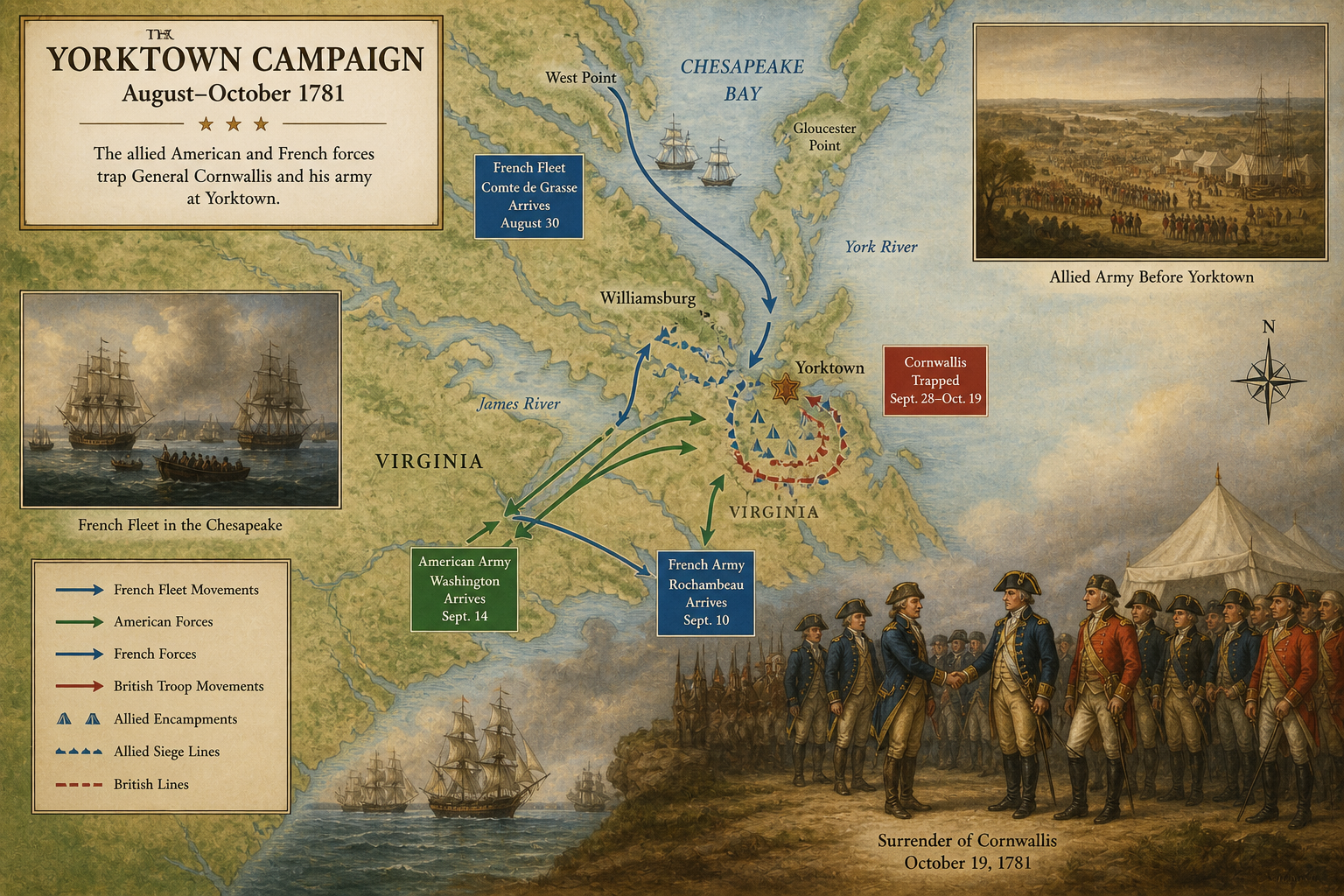
In 1781, the financial crisis reached a pivotal moment. General George Washington identified an extraordinary opportunity: the British army under Cornwallis was trapped at Yorktown, Virginia. A swift, coordinated campaign — combining Washington's forces with French allies — could force a decisive British surrender.
Yet Washington's army was short of money and supplies. Soldiers had gone unpaid for months. Morale was fragile. The campaign required immediate funds to move troops south, secure supplies, and maintain discipline.
According to later accounts, Washington needed approximately $20,000 to set the campaign in motion. Robert Morris, the Superintendent of Finance, had almost nothing available and his credit was exhausted. The greatest military opportunity of the war was endangered not by British strength — but by empty American coffers.
The Yorktown Campaign, 1781 — a military masterstroke nearly undone by financial collapse.
Primary Source Context
Washington's Yorktown opportunity required immediate funding. The army needed pay, supplies, and confidence at exactly the moment the government had little money and limited credit. The question was whether private sources could fill the gap that government could not.
Decision Check: What best describes the Yorktown crisis?
The army had supplies, but Washington wanted better equipment.
A major opportunity existed, but lack of funding threatened it.
Congress quickly taxed the states and solved the problem.
Yorktown: Fact Recall
Use the passage to answer each question precisely.
6. Chaim Salomon: Spy, Broker, and Financier
Read + Sequence + Recall6
Chaim Salomon was born in 1740 in Poland to a Sefardic Jewish family. In 1775, he immigrated to New York City, where he quickly established himself as a financial broker. By 1776, he had joined the Sons of Liberty and was actively supporting the Patriot cause.
The British eventually arrested Salomon and held him for 18 months, using him as an interpreter for their German (Hessian) soldiers. While in British custody, he used his position to help Continental soldiers escape, persuade German soldiers to desert, and carry out acts of espionage on behalf of the American cause.
He was captured again in 1778 for spying and sentenced to death. He escaped and fled with his family to Philadelphia, arriving nearly penniless. Once in Philadelphia, Salomon rebuilt his financial practice at the very center of the Revolution. Congress officially named him "Broker to the Office of Finance of the United States," and France named him "Treasurer of the French Army in America."
Watch Carefully
The video helps you picture Salomon's life, not just memorize dates. Pay attention to the risks he took, the world he lived in, and why his role as a broker mattered.
Film: Sons of Liberty (Warner Bros., 1939) — Selected clips dramatizing Chaim Salomon's role in the Revolution.
Salomon's Life: Key Dates
1740Born in Poland to a Sefardic family
1775Immigrates to New York City; becomes a broker
1776Joins Sons of Liberty; arrested by British
1778Re-arrested for spying; sentenced to death; escapes to Philadelphia
1781Named Broker to the Office of Finance; funds Yorktown
1785Dies in Philadelphia, nearly bankrupt from wartime loans
Sequence: Salomon's Story in Order
Place the events in chronological order by typing 1–5 in each box. Each number used exactly once.
Who Was Chaim Salomon? Fact Check
Choose the correct answer for each question based on the biography above.
7. Salomon's Financial Work
Read + Causation + Source Analysis7
As a broker, Salomon's primary role was to sell government securities — essentially, certificates of debt. When Congress needed money, it issued these certificates. Salomon found buyers, negotiated favorable rates, and delivered the proceeds to the government.
This work required an unusual combination of skills: financial expertise, a broad personal network, fluency in multiple languages (he spoke English, French, German, Polish, Yiddish, and others), and a reputation for honesty that made both buyers and sellers trust his word.
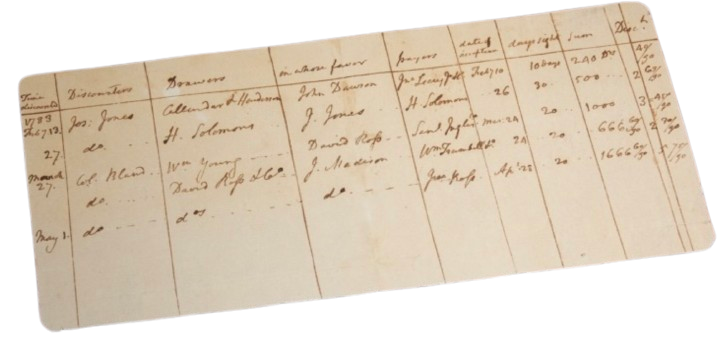
Salomon did not merely sell securities for Congress. He also personally extended credit to key leaders of the Revolution. James Madison — later the fourth president — borrowed money from Salomon multiple times to survive financially while serving in Congress. Madison's own ledger records these loans. Thomas Jefferson also borrowed from him. Robert Morris, the "Financier of the Revolution," worked in close partnership with Salomon to stabilize the government's finances in the war's final years.
Salomon's Languages
He spoke English, French, German, Polish, Russian, and Yiddish — critical for negotiating with European bankers and convincing Hessian soldiers to desert the British.
Madison to Salomon
I have for some time been a pensioner on the favor of Haym Salomon, a Jew broker. The kindness of our little friend in Front Street, near the coffee house, is a fund which will preserve me from extremities, but I never resort to it without great mortification.
Madison's personal ledger — showing money borrowed from Chaim Salomon during the crisis years.
Causation: Why could Salomon do what Congress could not?
Choose the most accurate and complete explanation.
Salomon secretly used British funds to support the Patriot army through hidden accounts.
Salomon used trust, contacts, and languages to raise money when Congress could not.
Salomon paid for the whole war himself and never expected any repayment.
Primary Source Analysis: Madison's Letter
Re-read the Madison quote above, then answer these questions about what it reveals.
Big Picture: What Made Victory Possible?
Based on the whole lesson, choose the best explanation.
Military strategy alone determined the outcome at Yorktown.
Private credit helped turn military opportunity into action.
Foreign aid removed the need for American financial support.
8. Legacy and Historical Significance
Read + Reflect + Synthesize8
Chaim Salomon died in Philadelphia on January 6, 1785, at the age of 44. He died nearly bankrupt because the loans he had extended to Congress and to individual leaders were largely uncollected. His family was left with very little.
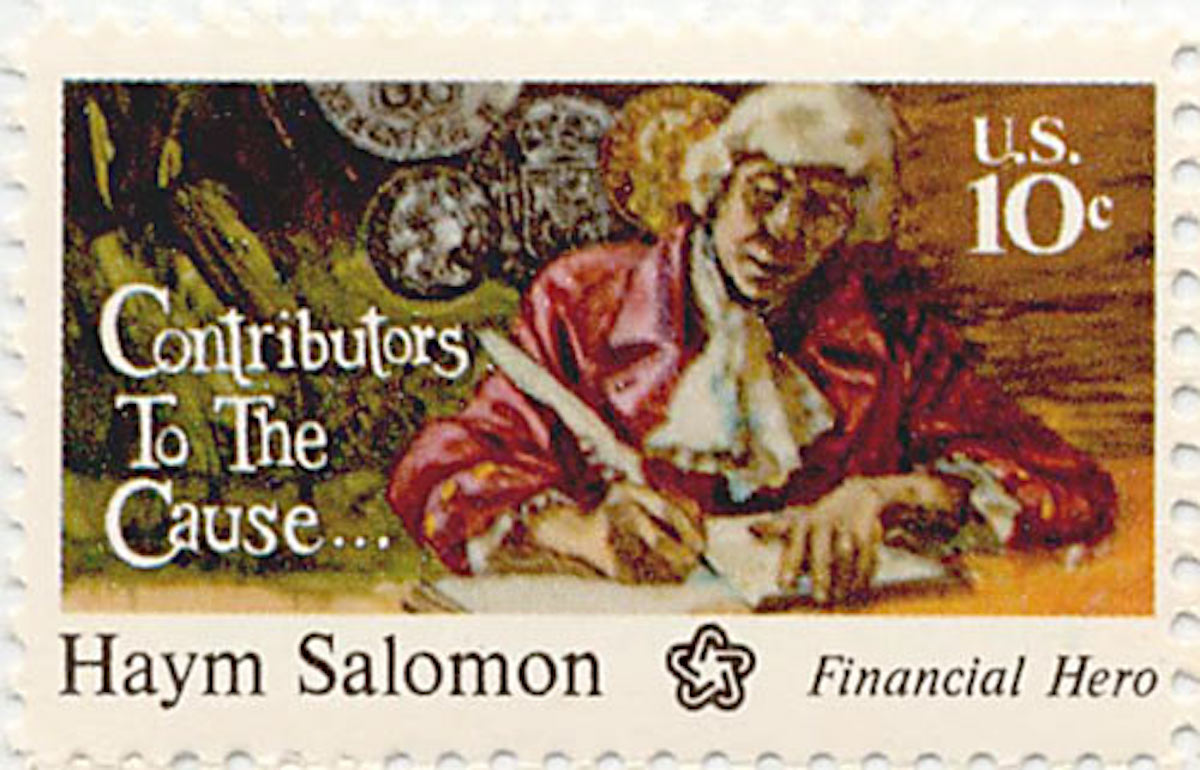
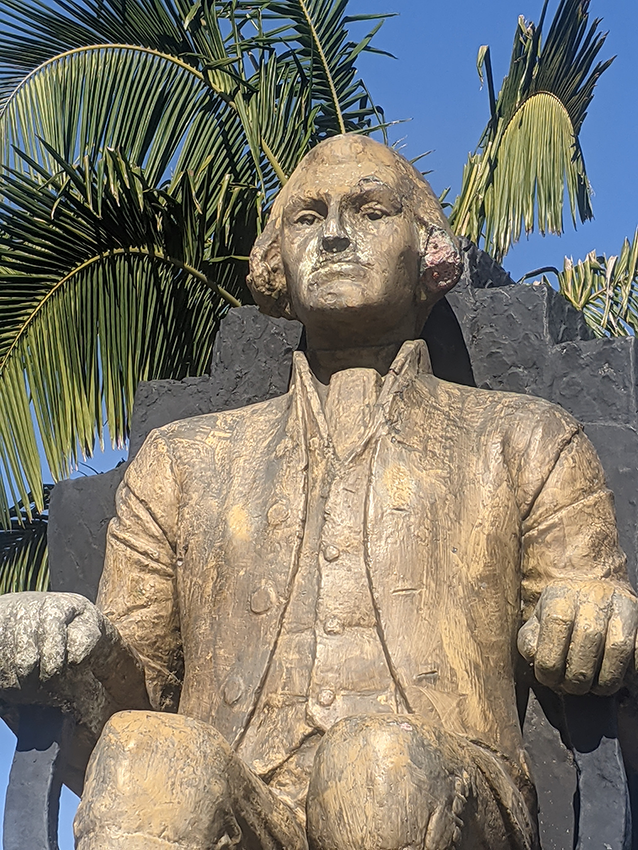
For much of American history, Salomon's role was underappreciated or forgotten. In 1975, the United States Postal Service issued a stamp in his honor as a "Financial Hero of the American Revolution." A statue of Washington flanked by Robert Morris and Chaim Salomon stands in Chicago's Heald Square.
The 1975 U.S. Postal Service stamp honoring Chaim Salomon as a Financial Hero of the American Revolution.
Heald Square Monument in Chicago: George Washington flanked by Robert Morris and Chaim Salomon.
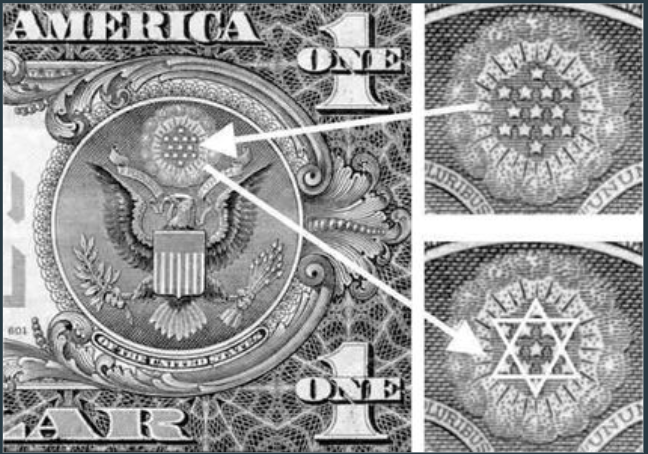
The Great Seal's constellation of thirteen stars. A popular legend connects the star arrangement to Salomon, but the story is unsubstantiated.
Legend vs. Evidence: One unsubstantiated legend says that when the Great Seal of the United States was being designed, Washington had the thirteen stars arranged in the shape of a Magen Dovid to honor Salomon's contributions. Historians treat this as a legend rather than a proven fact, but it shows how later Americans tried to connect Salomon's memory to national symbols.
Salomon's story raises broader questions that historians still debate: How do private financial networks interact with public institutions during crises? What does it mean to contribute to a national cause when one's community is marginalized within that nation? And what do we owe to people whose contributions were essential but whose names were forgotten?
Legacy: Key Facts
Answer each question using the passage above.
Final Synthesis: Salomon's Historical Significance
Which statement most precisely captures his role and what it reveals about the Revolution?
Salomon mattered mainly because he commanded soldiers directly.
Salomon mattered because he alone paid for the whole war.
Salomon showed how private trust could support a weak government.
Ready to finish? Enter your name, generate the certificate, then screenshot it and upload the screenshot to Canvas.
Certificate of Completion
Financing the Revolution
This certifies that
Student
★ 1776
has successfully completed the interactive lesson
"Survival Under Pressure: War, Finance, and Chaim Salomon"