Before You Begin
DirectionsWork through every section in order. Each section has at least one activity, and your final score depends on completing all of them.
One rule guides this lesson: If a paragraph cannot be named, it cannot exist. Every paragraph in a strong essay has a job — and that job comes from the thesis.
1. What Is an Expository Essay?
Read + Check 1An expository essay is a piece of writing that explains something. It does not try to tell a story, share an opinion, or convince a reader to do something. Its job is to make a topic clear.
To do this clearly, every expository essay follows the same basic structure: an introduction, a series of body paragraphs, and a conclusion. Each part has a specific job. When even one part is missing or unclear, the whole essay becomes harder to follow.
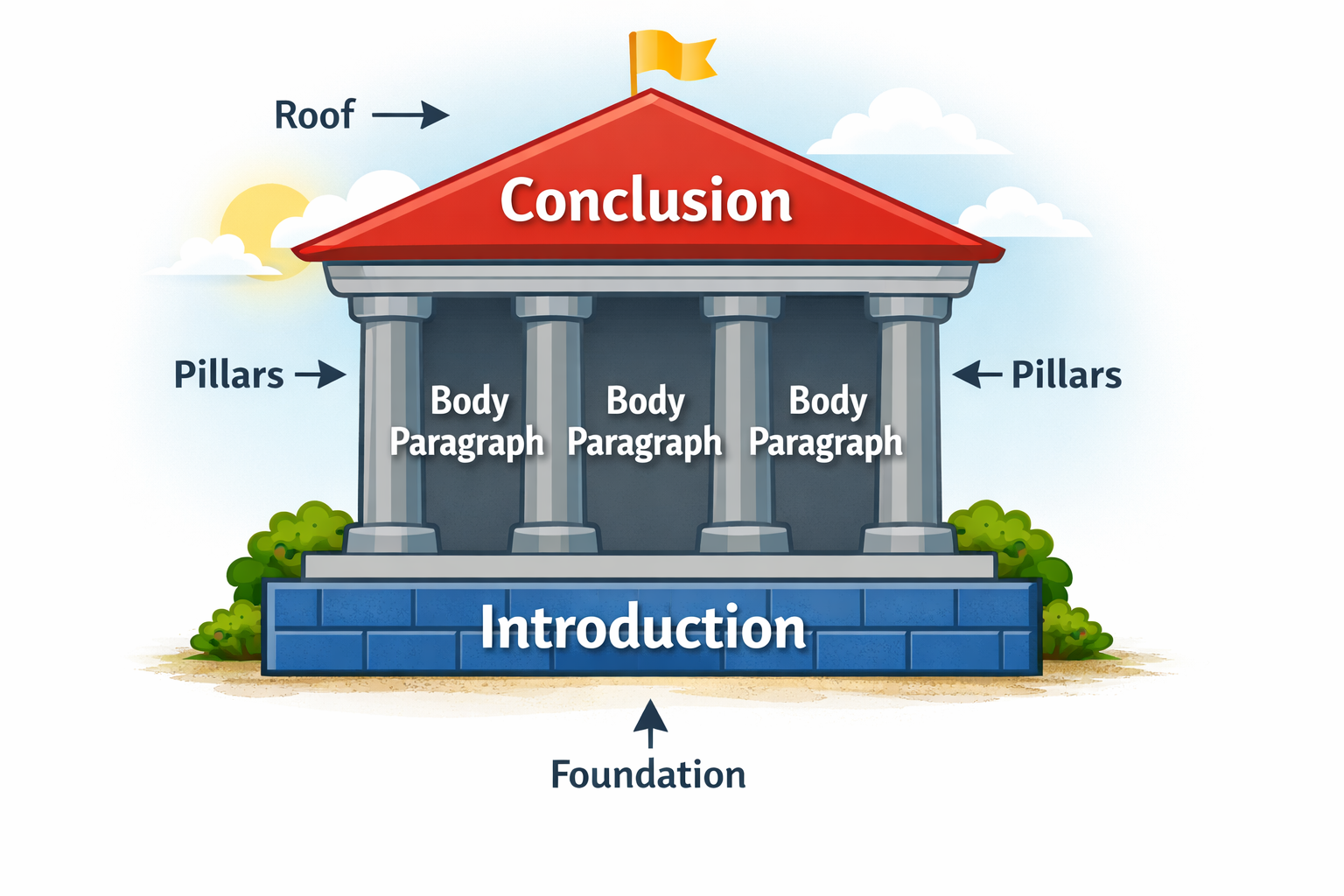
Think of the essay like a small building. The foundation holds everything up. The pillars support the structure. The roof ties it all together. Pull out one piece, and the building falls.
Check for Understanding: The Basics
2. The Structure: Foundation, Pillars, Roof
Read + Sort + Check 2Each part of the essay has a different job, but all three jobs serve the same goal: clear explanation.
The foundation orients the reader and ends with the thesis — the essay's promise. The pillars are the body paragraphs, each one proving a single part of that promise. The roof is the conclusion, which closes the essay by tying the pillars back together.
If the foundation is weak, nothing above it can stand. If a pillar is missing, the roof will not hold. If the roof is missing, the essay never resolves.
Chip Sort: Match the Part to the Job
Introduction
Body Paragraphs
Conclusion
Quick Recall: Structure Questions
3. The Foundation: Introduction
Read + True/False + Check 3The introduction is the foundation. Its job is to orient the reader — to make sure the reader is ready to receive the explanation that follows.
A good introduction does three things: it names the topic, gives just enough context to set the topic up, and ends with the thesis. The thesis is the essay's promise. It tells the reader what the rest of the essay will explain.
The introduction is not the thesis. The introduction gets the reader ready. The thesis comes at the end of the introduction — most often as the last sentence, though a short transition sentence (such as "The reasons follow below") may sometimes come after it. What matters is that the thesis lands clearly at or near the end, so the reader carries its promise forward into the body of the essay.

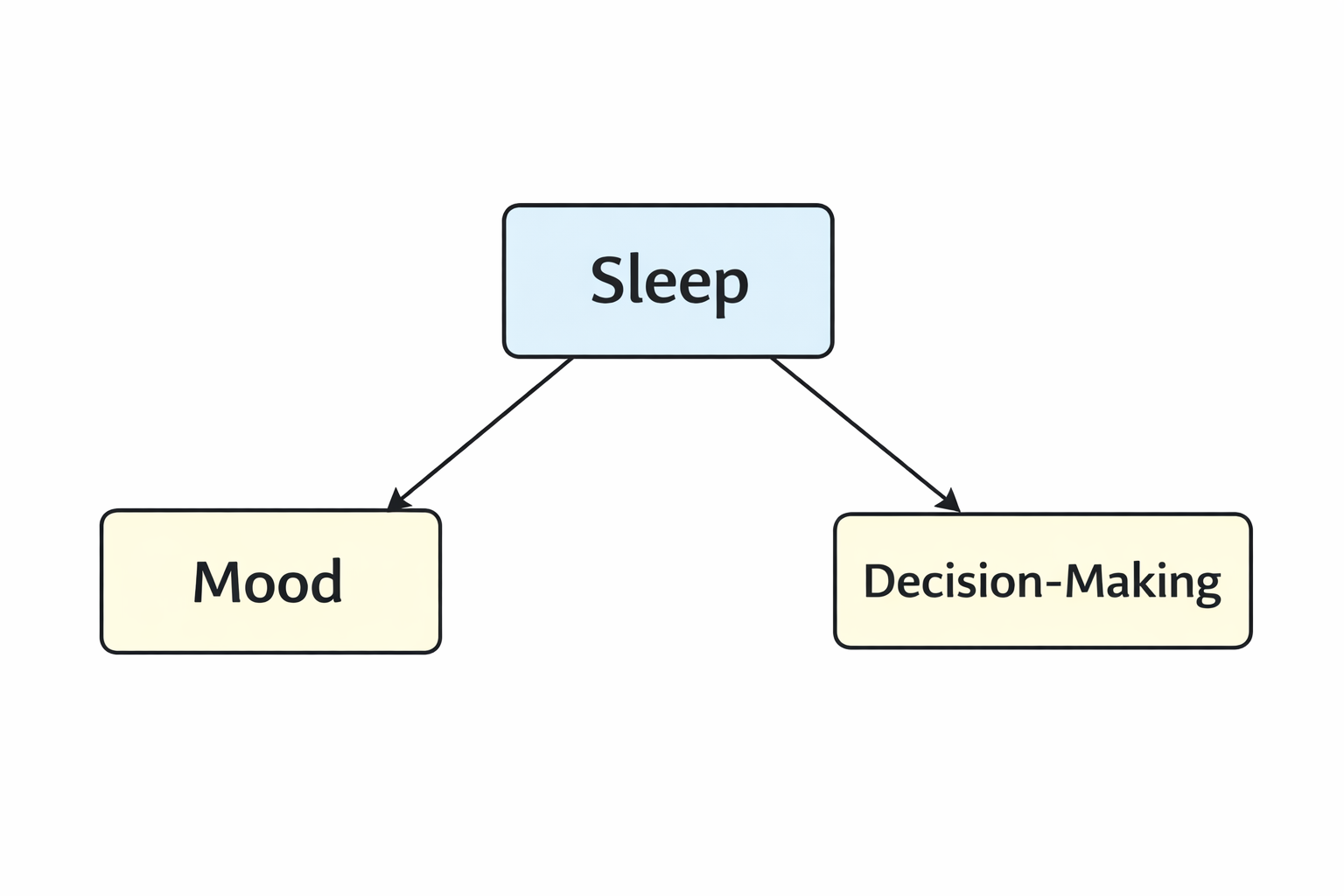
Lack of sleep affects teenagers' mood, decision-making, and school performance.
True or False: The Introduction
Apply It: Introduction Choices
4. The Pillars: Body Paragraphs
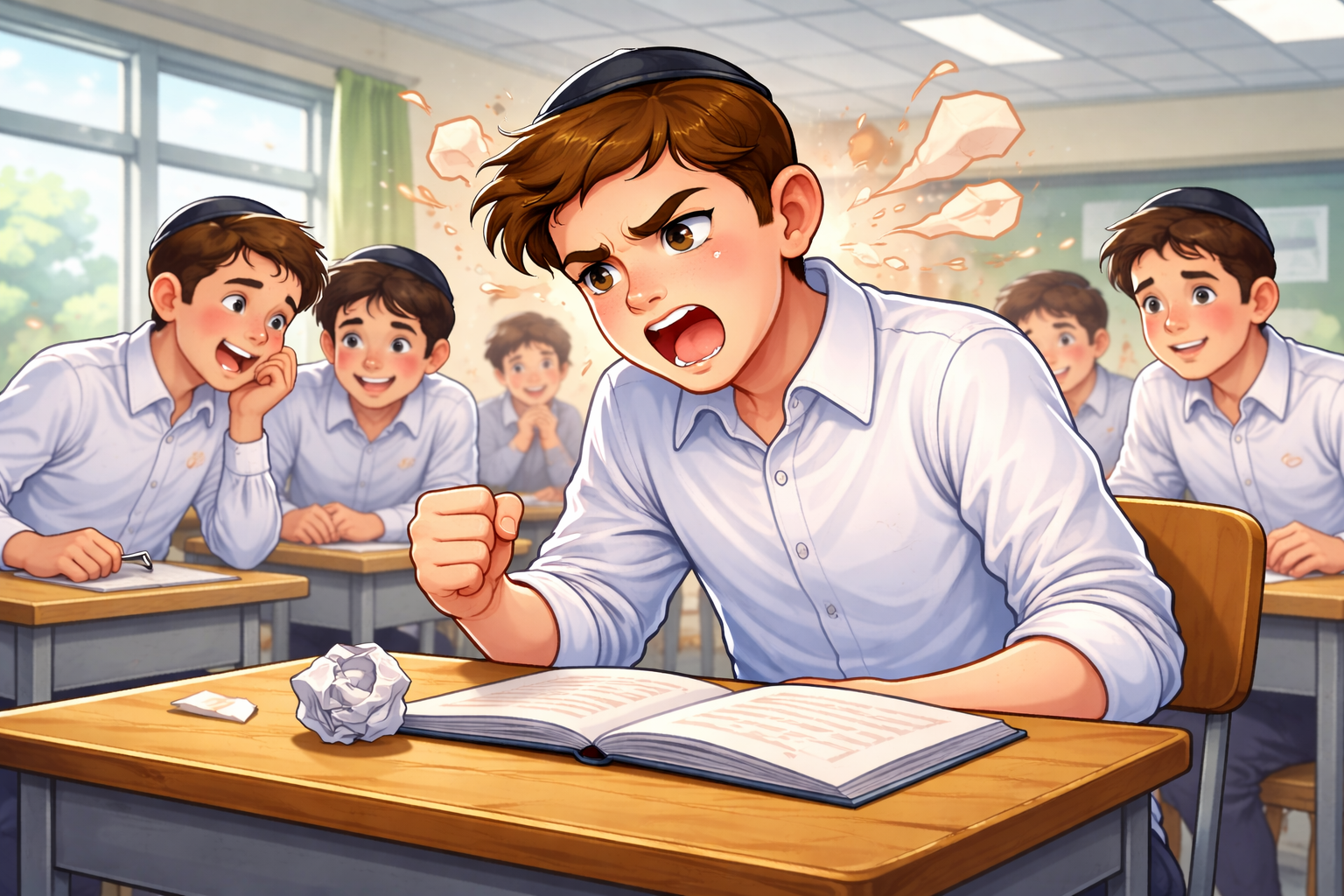
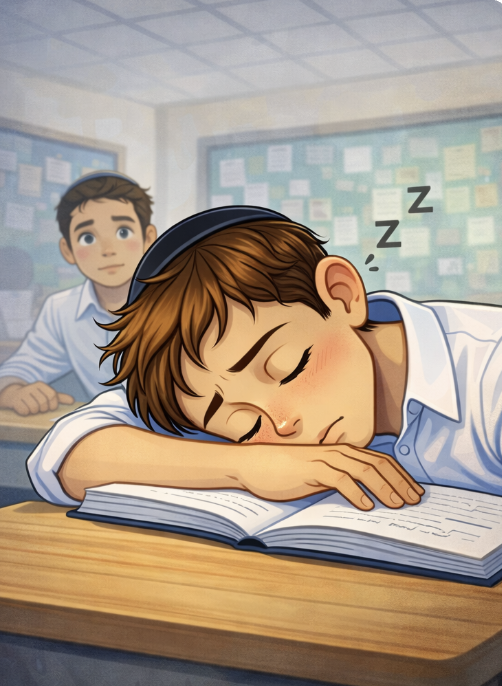
Read + Sort + Check 4Each body paragraph is a pillar. Its job is to prove one part of the thesis — not all of them at once. If the thesis names three ideas, the essay will need three body paragraphs, one for each idea.
Chip Sort: Which Body Paragraph Does This Belong In?
Mood (BP 1)
Decision-Making (BP 2)
School Performance (BP 3)
Body Paragraph Rules
5. The Thesis Bridge
Read + Match + Choose 5The thesis is the most important sentence in the essay. It is the bridge between the introduction and the body paragraphs. Whatever the thesis promises, the body paragraphs must deliver — in the same order, using the same ideas.
A strong thesis creates clear paragraph jobs. A reader should be able to look at the thesis and predict what each body paragraph will explain. A weak thesis is too vague, too broad, or too dependent on opinion. It does not give the writer enough direction.
Quick Glossary
Apply the Vocabulary
Strong or Weak Thesis?
6. Topic Sentences: Where Each Pillar Begins
Read + Match + Choose 6Every body paragraph begins with a topic sentence. The topic sentence is the beginning of the pillar — the place where the paragraph rises from the foundation (the thesis) and announces which part of that thesis it is going to prove.
A good topic sentence uses words that match the thesis. If the thesis names "mood," the topic sentence for that body paragraph should clearly be about mood. If a topic sentence wanders off, the paragraph beneath it usually wanders too.
Three Topic Sentences for the Sample Thesis
BP 2: Sleep loss weakens focus and impulse control.
BP 3: Sleep loss makes it harder to concentrate, learn, and keep up with schoolwork.
Match Topic Sentences to Thesis Parts
Choose the Best Topic Sentence
For Body Paragraph 1 (Mood):
7. The Roof: Conclusion
Read + Check + True/False 7The conclusion is the roof. Its job is resolution — to tie all the pillars back together so the reader leaves with a clear sense of what the essay explained.
The conclusion does not introduce a brand-new argument. It does not repeat the introduction word-for-word. It revisits the thesis parts and brings them to rest.
Lack of sleep affects teenagers in more than one way because it changes how they feel, how they think, and how well they function in school. When teens protect their sleep, they support steadier moods, better decisions, and stronger school performance during the day.
Conclusion Choices
True or False: The Conclusion
8. Putting It All Together
Sequence + Synthesis 8Now you have the full picture. A strong expository essay is a structure of named jobs: the introduction orients and sets the thesis promise, each body paragraph proves one part of that promise, and the conclusion resolves by tying the parts back together.
Sequence: Order the Parts of an Essay
Final Synthesis: What Makes an Essay Strong?
The Basics of an Expository Essay
This certifies that
Student
cannot be named,
it cannot exist.
has successfully completed the interactive lesson
"Foundation, Pillars, Roof: Structure and Thesis"
Score: 0